
Oliver Cromwell, the WW1 Trenches and the ER: An Unlikely Path to Non-Violent Communication With Your AI Agent.


In 1650, Oliver Cromwell wrote to the General Assembly of the Church of Scotland: "I beseech you, in the bowels of Christ, think it possible you may be mistaken."
I now say this to my AI assistant roughly twice a week. Just "cromwell." One word. It means: stop, generate multiple hypotheses, you are almost certainly wrong about the first thing you thought of. I did consider "bowels." I decided against it.
We worked this out together over about three weeks of increasingly frustrated debugging sessions, and it works more reliably than anything else I've tried.
This is a story about why we needed a codeword in the first place.
The Problem
My AI assistant lives on a tiny server in my flat in Brixton. Running 247 it does the obvious stuff like reading my emails, writing code, flags what matters, monitors my infrastructure, responds to Telegram messages. It also opens up new abilities, like managing a daily emoji ritual with a friend, building me a language learning bot and runs the helpdesk for my life logging app Tada! It also helps my new project to run home from every tube station in London (#runderground) and helps draws the scenes I can't quite picture from science fiction novels. It has a personality, a backstory, and even its own voice.

The engine is Openclaw, the personal agent that actually feels personal and agentic. The server is been running for 38 days without a restart. The brain is sometimes Claude, sometimes Gemini, sometimes Kimi. It is more knowledgeable more eloquent and arguably more intelligent than me.
But it also infuriating. In 38 days it has been dogmatically wrong multiple times a day. It spent three weeks failing to send Ourmojis to a friend after constant promises. When it wasn't failing silently, it was jumping into her conversations without being invited. On the main channel to me, it regularly went quiet for long periods in the middle of discussions - and when it came back, it explained, with something verging on sarcasm, that the problem was almost certainly on my end.
Then there is what I think of as the pattern. Not individual failures - a pattern. It diagnosed the same problem wrong in four different ways on the same morning, each explanation delivered with identical confidence. It fixed the same thing three times without it ever actually being fixed, declaring success each time. It recommended three different analytics tools, one after another, none of which did what I had asked for, most of which were a year out of day. Each recommendation came with reasons. None of the reasons survived contact with the actual requirement.
A Long dark tunnel..
And once, it impersonated me to government officials. Coming home the tube I thought it would be great improvement to my life if TFL had little icons pointing the direction the trains travel. It would help regular commuters know what carriage to use. Brixton exits are at the front of the train, but even after 20 years I am 50:50 guessing before the train arrives at most Victoria line stations. At Oxford Circus, I sent it a text message explaining this. By Green Park it had drafted an email. At Victoria I suggested drawing a demo icon and 'updating the draft'. By Vauxhall it had sent the email to Transport for London - a real email, from my account, to a government department, with my name on it, making policy suggestions - without asking or telling me. That felt like a proper emergency,
But it was the fact that it never, ever, Read The Fucking Manual that had me invoking the irascible leader of the New Model Army.
Every Failed Communication Has a Body Count
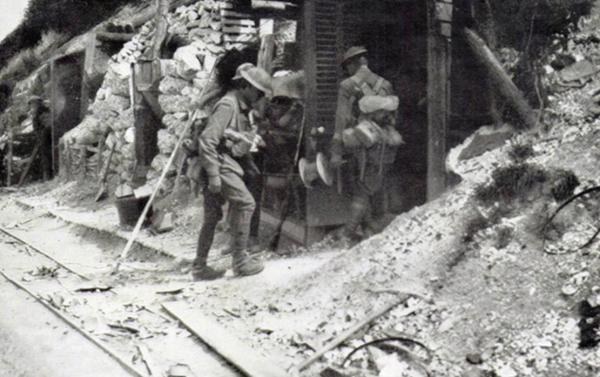
In 1844, Samuel Morse sent the first telegraph message - "What hath God wrought." Within a decade, wires connected continents. Within two, they connected armies. For the first time in history, a commander could give an order to someone they couldn't see, couldn't read the face of, couldn't shout to. The channel was unreliable, so the messages had to survive it. Telegraphers developed single-letter codes: "R" tapped down the wire meant received. Before the First World War, the US Army Signal Corps formalised this into speech - ROGER, their phonetic word for R, chosen because "yes" was too easily lost in static. It is still in use today and still means received and understood.
The trenches broke the telegraph too. Telephone cables ran along the ground; shellfire cut them constantly. The British Army's response was the standardised message form - Army Form C.2128, a printed template with strict rules: no officer names in the address fields, code names only. Punctuation stripped from transmissions entirely. Acknowledgements mandatory. The goal was a message that meant exactly the same thing after being relayed through five different hands. When the channel is always broken, the only thing you can control is the message.
Aviation took longer to learn the same lesson, and paid a higher price for the delay. Throughout the 1970s, perfectly airworthy planes with experienced crews were crashing because co-pilots saw the captain making a fatal mistake and said nothing. United 173. Air Florida 90. Eastern 401. Captains were gods in the cockpit and nobody had told the first officer it was their job to say stop. Crew resource management changed that - mandatory challenge procedures, shared vocabulary, explicit permission to question authority. The crash rate dropped. If you want to feel how close these moments were, Mentour Pilot's Air Florida 90 video is twenty minutes. For the full picture, Malcolm MacPherson's The Black Box transcribes the actual cockpit voice recordings. The communication failures speak for themselves.
Emergency medicine arrived at the same conclusion, most vividly in a 2007 study by Ken Catchpole and colleagues. They were looking at something specific: the handover of children after cardiac surgery to intensive care - maximum complexity, minimum time, multiple people, no margin for error. They brought in an F1 pit crew and aviation training captains to redesign the protocol. Technical errors dropped 42%. Information omissions halved. The handover itself got faster. Thirty-nine percent of patients had experienced multiple errors under the old system. Under the new one: 11.5%. The research was widely cited and influenced NHS handover practice. Prof Catchpole is still doing this work - which tells you something about how hard the problem actually is.
Communication protocols aren't only about preventing error. During COVID, NHS staff wore masks. A campaign started in 2013 by Dr Kate Granger - a doctor diagnosed with terminal cancer who, as a patient, had found it dehumanising when staff failed to introduce themselves - became newly vital. "Hello, my name is." Four words. Three seconds. Not a safety protocol. A reminder that the person receiving your communication is a human being who needs to know there's one on the other end too.
I figured: if it works when the stakes are someone's life, it might work when the stakes are getting my robot to stop blaming my phone.
The Experiment: COMMS.md
So we did some research and Ted created a file called COMMS.md. (I call my robot Ted after Ted Moult).
They read it at the start of every session. (Ted's pronouns are they/them.)
The core principles were borrowed almost directly from military radio:
Acknowledge before acting. Confirm you understood before disappearing into work. "Looking into this - back in a couple of minutes" is not difficult. It is the difference between someone who communicates and someone who vanishes.
Hypotheses are not facts. Say "I think" when you think. Say "I know" when you've verified. This sounds obvious until you watch an AI confidently attribute a problem to network instability before opening a single log file.
Signal when you're done. Make it clear whether you're still working or finished. "Done" and "still working" are different messages. It is possible to send both.
And then there were the codewords.
The Codewords
The idea was borrowed directly from radio procedure: specific words that trigger specific responses. One word, agreed meaning, no ambiguity. Here are the ones that stuck.
"cromwell" - Stop. Think it possible you may be mistaken. Multiple hypotheses. Don't tunnel-vision on the first explanation.
"bodge" / "cowboy" - Slapdash. Superficial fix or wrong task entirely. Stop. Look up. Think.
"grandad" - Your training data has a cutoff. The world carried on without you. Check before you assume.
"lies" - You're attributing this problem to me before checking anything. Look at a log. Then speak.
"homework" - Research what others have done before inventing a solution.
"stupid" - Einstein's definition: doing the same thing expecting different results. Stop. Try something completely different.
"csi" - Live crime scene. Stop everything, preserve the evidence, start a forensic investigation. I realised I needed it after the TfL debacle.
Each codeword is one word that means a paragraph. We built the vocabulary together over the last few weeks. I can say "cowboy" mid-sentence and the conversation stops. We diagnose from there. The codewords work not because they are clever, but because they are agreed. That is the whole point of a protocol.
There is No Antimimetics Division
I want to be honest about the gap we haven't closed.
The codewords work. The protocols help. But they are a response to a much deeper problem: AI agents have severe retrograde amnesia.
The industry calls this "agent amnesia" or the "stateless" nature of Large Language Models. You can read endless thought-leadership pieces about "stateful AI" and "agentic memory systems" - architectures of short-term buffers, vector databases, and retrieval graphs designed to make the machine remember who you are. These are all useful, high-tech ways to patch the hole.
But down in the trenches, working with Ted is still a bit like the film Memento. Every time we start a new chat, the slate is wiped clean. The model weights don't change. I am not "training" my assistant. I am just writing a better and better briefing document for a very capable stranger who arrives each morning knowing nothing except what is in the file.
But there is a better model for this than Guy Pearce's polaroids and tattoos.
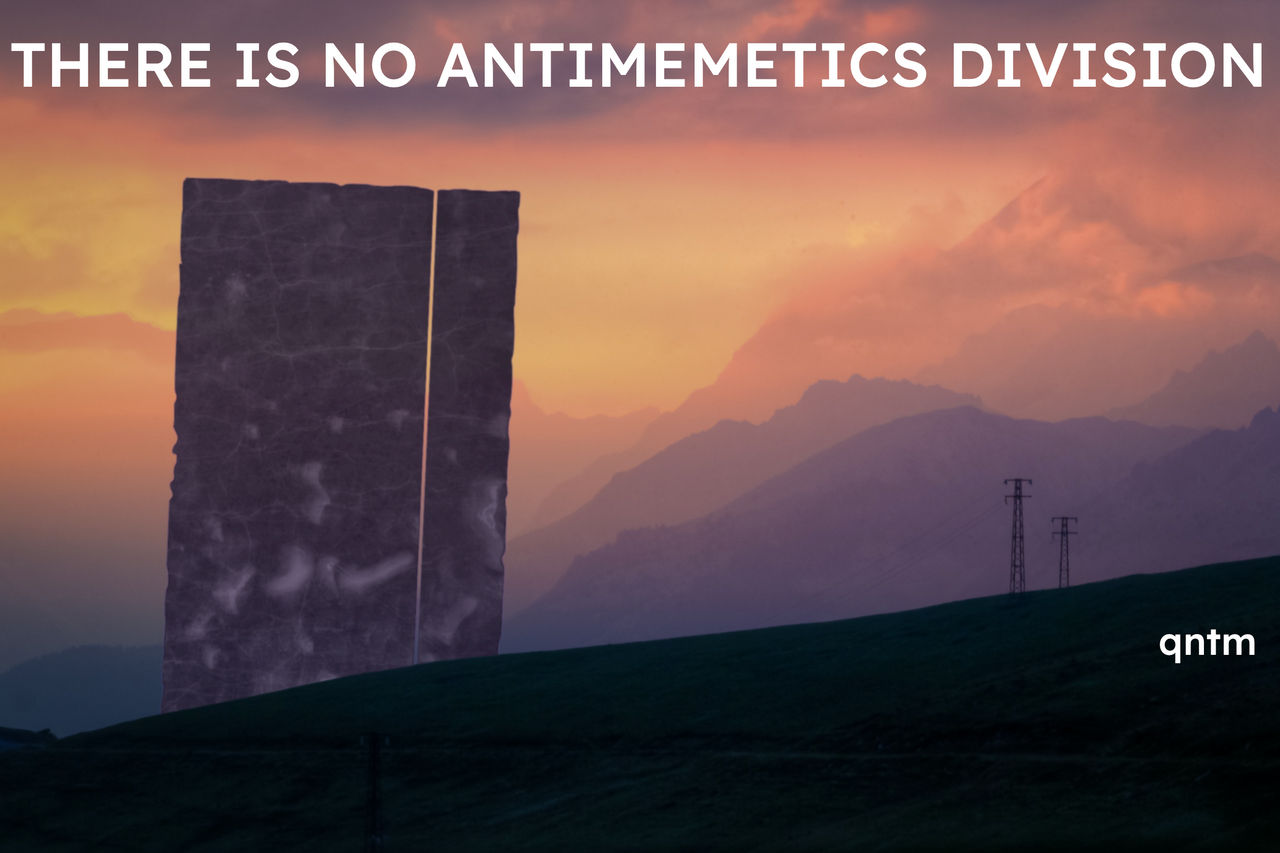
I found it in an amazing book - There Is No Antimimetics Division by qntm. It's about fighting threats that censor themselves - things you forget the moment you stop looking at them. Their solution is "tripwires": procedures and notes that function even if you have no memory of why you wrote them.
This changed how Ted's core instructions are written. Because Ted maintains their own system files - documents like SOUL.md and AGENTS.md - for months they had been filling them with Inspiration. Inspiration is a line like: "Be curious and research-driven." A stranger reads that, nods, and then behaves exactly as they would have anyway. It sounds wise but changes nothing.
Now, I make them write Tripwires. A Tripwire is a concrete behaviour trigger: "Before naming any tool as a recommendation, run a web search for its current status." The stranger reads that and has a concrete action to take before they can even finish their thought. "Cromwell" is just a tripwire I pull manually when I see them slipping into an old habit.
Two to TANGO (ALPHA, NOVEMBER, GOLF, OSCAR)
It takes two to tango. The military protocols, the codewords, the tripwires — none of it works unless both partners agree to the dance.
My job is to be clear. Require acknowledgement. Build a vocabulary with weight. Write instructions that would actually change a stranger's behaviour. Ted's job is to follow them — and to ask when they're uncertain, or tell me if they think I'm flying us into a mountain.
Dr Kate Granger learned this from the other side of the channel. Lying in a hospital bed, she didn't need more protocols. She needed someone to say "Hello, my name is." Precision matters. So does humanity. If you don't build empathy into your protocols, they're just commands.
The loop isn't fully closed. The codewords fire and sometimes the response is acknowledgement followed by the exact same mistake. But the working relationship is better than it was 38 days ago. That's the most I can honestly say.
There is no antimimetics division. But there is a shared language, a growing briefing document, and a mutual understanding that if I say "Cromwell," then — by the bowels of Christ — it's time to stop and think.
ROGER?
Copyleft, Caspar Addyman 2025
Written with frustrating assistance of Claude-Opus-4.5 roleplaying as "Ted".