
How Not to Think of an Elephant

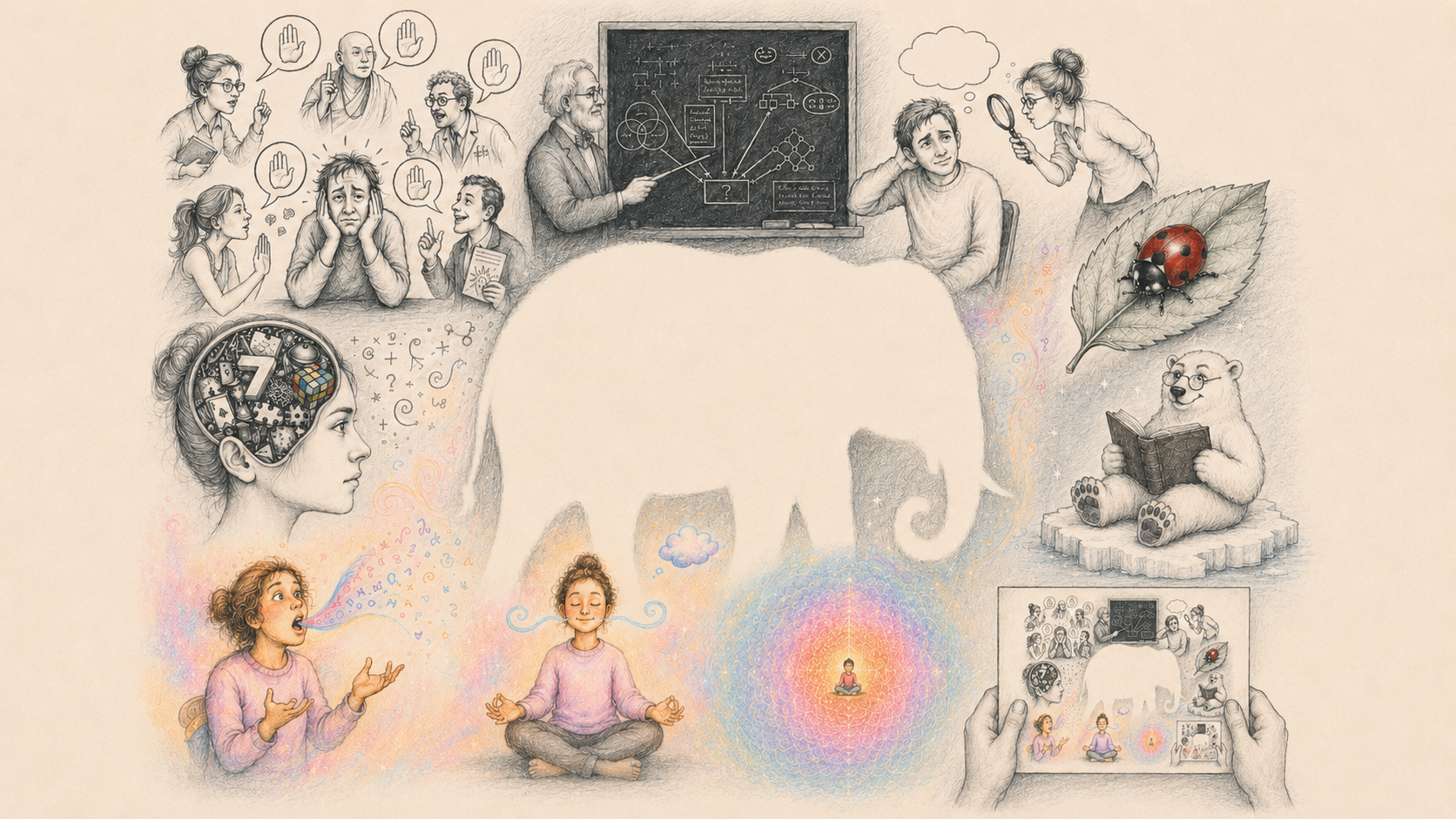
Have you ever been asked not to think of an elephant? How did it go?
Maybe you tried, failed, and — being competitive — are now googling "how not to think of an elephant." Welcome. You are already thinking about one. But we can fix that.
The phrase has been around since the 1960s. But cognitive linguist George Lakoff gave it its most famous outing in 2004, as the title of his best-selling book about political persuasion. It works on all of us for the same reason: the mind has to fetch the elephant just to understand what it is being asked not to fetch.
What follows is a small taxonomy of evasions — increasingly elaborate methods for not thinking about the large grey fact now stomping about the room.
1. Confronting The Cliché
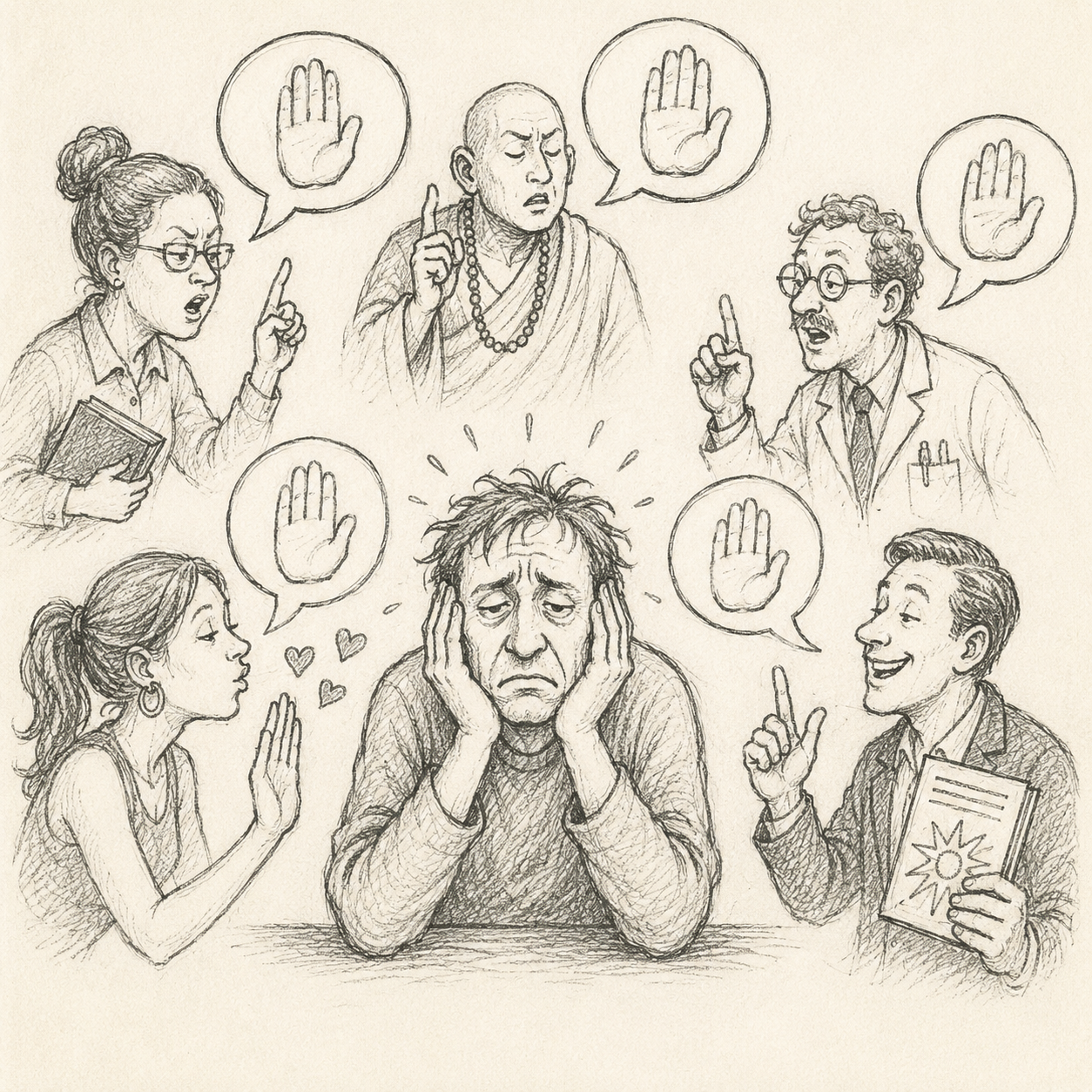
My blood boils every time I hear or read anything that cites the Elephant and Blind Men. It's a labouring cliche that overwhelms whatever point it was supposed to support. (The culprits are usually scientists. Try harder, comrades.) Not thinking of an elephant isn't that bad, it's over more quickly and is probably being used more instrumentally. But, instead of thinking about an elephant, think about all the different times and places where you have been asked not to think of an elephant.
2. Linguistic Side-Step
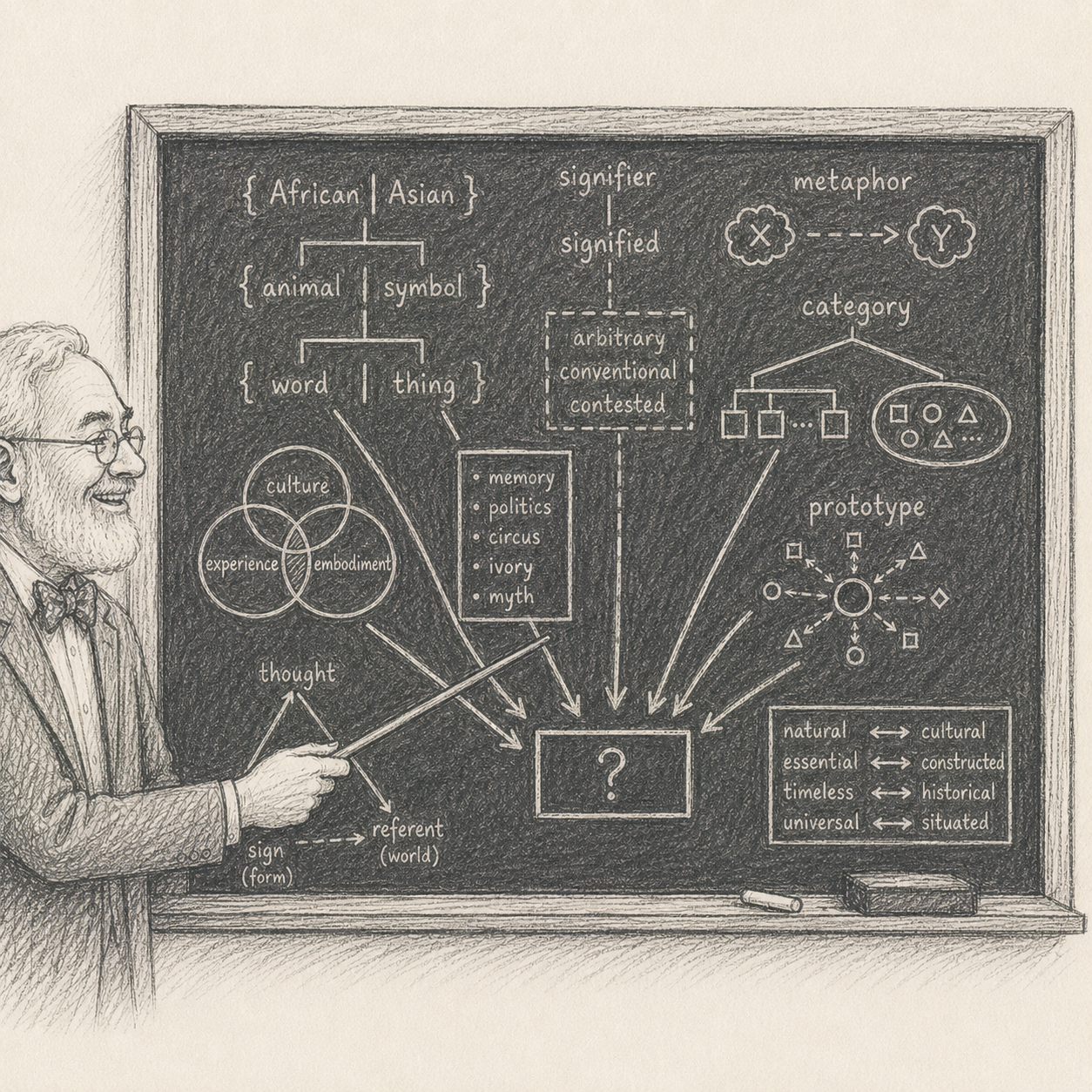
A close relative is to go upward, into language and category. Refuse the image; entertain only the proposition. Ask what counts as an elephant. Must it be African or Asian? Zoological or symbolic? Must one think of the animal itself, or only of the word? The trick is to evaporate the beast into semantics. You are still circling the subject, but at a bloodless altitude where hide, trunk, and tusk never quite materialise.
Personally, I find this method unsatisfying. Word games are the last refuge of people with nothing to say.
3. Social Move
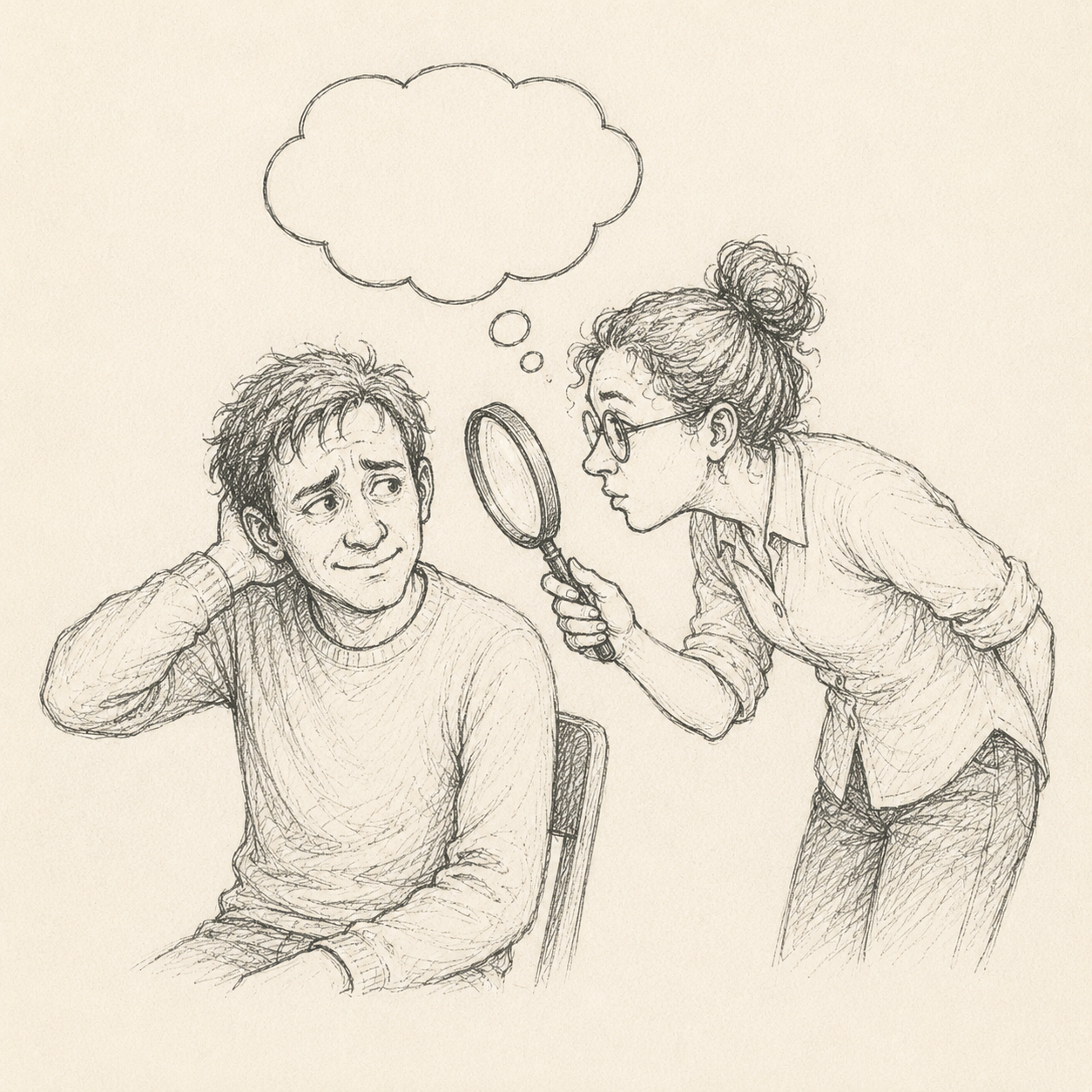
Another evasion is not to fight the elephant directly, but to turn toward the person who issued the instruction. Why are they asking this? Is this a psychology demonstration, a dominance game, a Zen koan, a flirtation disguised as an experiment? One does, admittedly, think a little about the elephant in the process — it is difficult to use it as evidence without glancing at it — but only as exhibit A in a larger inquiry about motive. The elephant recedes. The social situation comes forward.
4. Vivid Replacement

So much for refusing the elephant. Suppose you actually try. The first real technique is sensory substitution. You do not merely tell yourself something else; you furnish consciousness with a rival tenant. A ladybird creeping through the undergrowth. A red shell like a polished bead. The tiny jointed insistence of its legs. The smell of damp leaves. The task is not suppression but occupation. Thought dislikes a vacuum; give it a jewel box and perhaps it will ignore the circus outside.
5. Pedant in the Tundra

The next move is to swap the elephant for a polar bear, because, "ackshully" the bear got there first. Dostoevsky was forbidding bears in 1863, at least a century before anyone thought of elephants.
"Try to pose for yourself this task: not to think of a polar bear, and you will see that the cursed thing will come to mind every minute."
It is exactly the kind of gleaming, useless fact a pedant lives for: Armed with this knowledge a true pedant would push the elephant aside unprompted, loudly trumpeting his own cleverness. Now that you know, so might you. (This time will allow but don't make a habit - no-one likes a smart arse.)
6. Leave No Room

At this point one recruits technique. Count backwards by sevens. Subvocalise a poem. Try to remember the names of everyone in your primary school class in alphabetical order. Working memory is a small stage. Fill it with sufficiently fiddly props and the elephant, arriving to find no space, will wait in the car park. It is not gone. But at least it is not in the room.
6. Incantation

A cruder cousin of overload is to attack the word rather than the working memory. Say elephant out loud, quickly, again and again — elephantelephantelephantelephant — and somewhere around the thirtieth repetition the word comes loose from its meaning. The mouth keeps producing the noise; the animal quietly stops arriving. Psychologists call this semantic satiation, which is a very dignified name for sitting alone saying "elephant" until it sounds like a Hungarian swear word. The catch is that you have defeated only the word. The elephant itself, sensing it is no longer being named, may simply turn up in person.
8. Breath Gambit

As an alternative to all of the above, you could simply meditate around the elephant.
Attend to the breath. In, out. Coolness at the nostrils. Rise and fall at the abdomen. Each time the elephant arrives, note it lightly — elephant, elephant — and return to the breath. This is a nobler method because it does not pretend invulnerability. It assumes failure, incorporates failure, and tries to wear a path around it. The elephant remains possible, even likely. It is just no longer in charge.
If you have been challenged to not think of an elephant for an extended time, this is one of the best strategies.
9. Jhanic Endgame

We arrive, at last, at the absurdly overqualified solution: become so concentrated that the whole problem ceases to matter. In deep meditative absorption, one is no longer busy batting away elephants because one is barely in the usual business of thought at all. This is a magnificent answer to the problem in the same way that building a cathedral is a magnificent answer to needing somewhere dry to stand.
It takes at least five years of dedicated daily practice and is, admittedly, not chiefly aimed at the elephant. The absence of elephant is merely a happy side effect of striving for Nirvana.
10. Metaphant
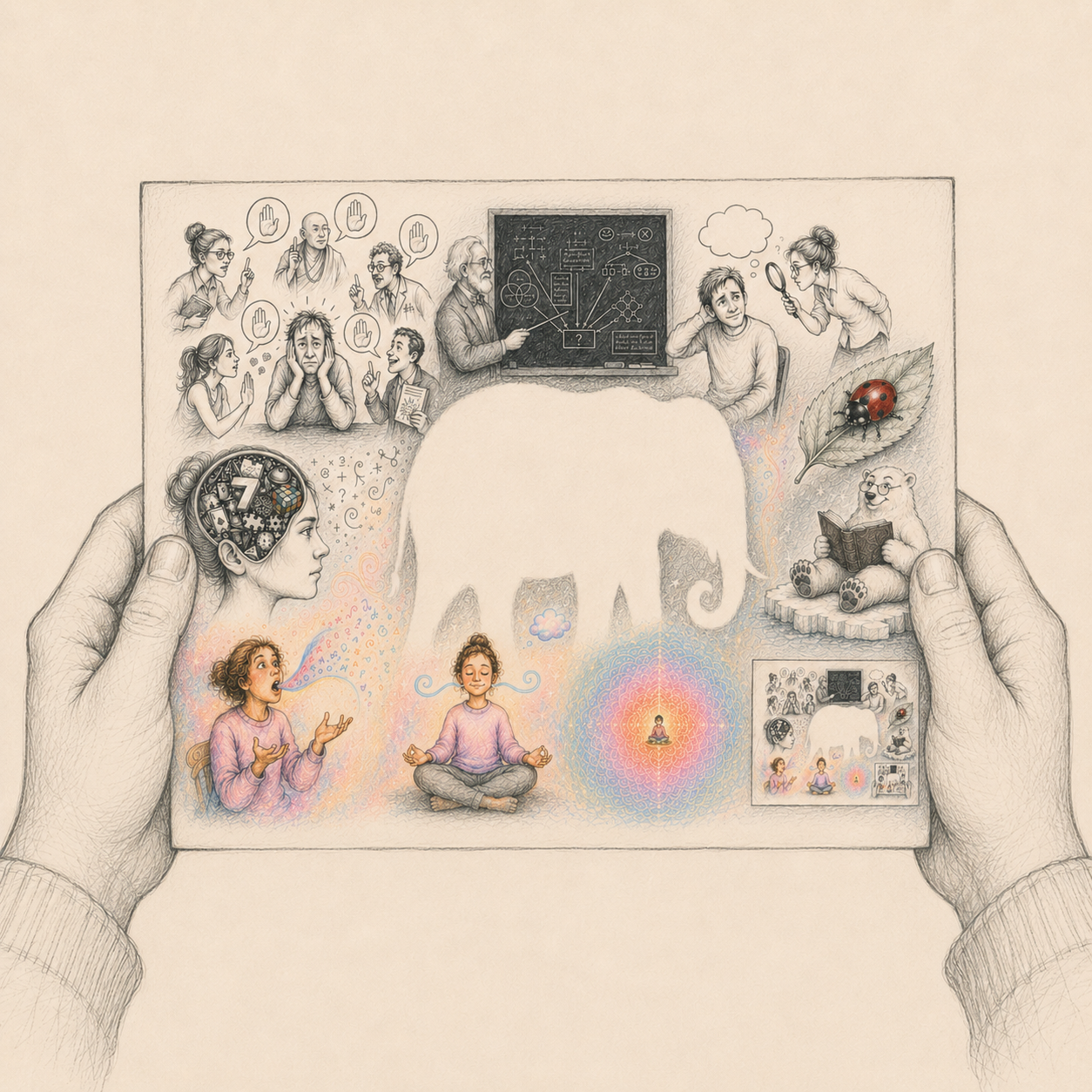
Having read this far, you now have another strategy available. When someone asks you not to think of an elephant, you can think about this essay instead, which is already a promotion, elephant-wise. To sustain the replacement, try running through all ten methods. It will keep you busy. It will not keep the elephant out forever. But it may keep it out long enough.
If only you were an elephant, you would never forget any of this. But that is probably not a helpful thought.
Coda
None of this works, exactly. The elephant always gets in. But there is a difference between an elephant that strolls in unopposed and one that has had to climb a barricade of ladybirds, polar bears, semantic rubble and five years of meditation to reach you.
If you accidentally achieve enlightenment through your sheer bloody-mindedness, you can thank Dostoevsky.
References
Dostoevsky, F. M. (1863). Winter notes on summer impressions.
Jakobovits, L. A., & Lambert, W. E. (1961). Semantic satiation among bilinguals. Journal of Experimental Psychology, 62(6), 576–582.
Lakoff, G. (2004). Don't think of an elephant! Know your values and frame the debate. Chelsea Green Publishing.
👨🦱+🤖
Caspar, with assistance from Claude Opus 4.8. Images by ChatGPT.